



Tuscarawas County ranks 2nd in Ohio deer harvest for 2025‑26 seasons

COLUMBUS, OH (WJER) (Feb. 3, 2026) – Tuscarawas County deer hunters finished second statewide during Ohio’s recently concluded 2025‑26 white‑tailed deer season, according to final harvest figures released by the Ohio Department of Natural Resources Division of Wildlife. Hunters in the county checked 7,623 deer, placing Tuscarawas just behind perennial leader Coshocton County.
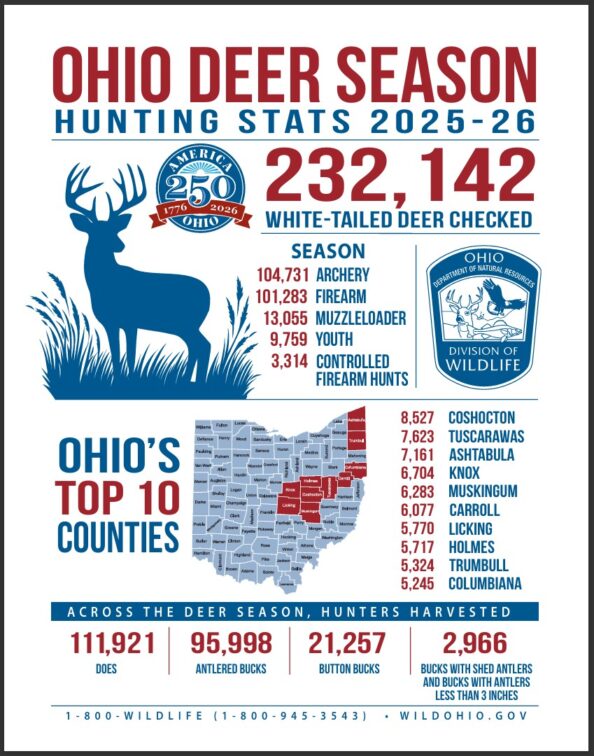
Statewide, Ohio hunters checked a total of 232,142 deer during the season, which wrapped up Sunday, Feb. 1. The total includes deer harvested during archery, gun, muzzleloader and youth seasons dating back to Sept. 13, 2025. The final tally represents the seventh‑highest deer harvest on record in Ohio and marks the fourth straight season with more than 200,000 deer checked.
Tuscarawas County’s second‑place finish highlights another strong year for deer hunting in eastern Ohio, where habitat conditions and hunter participation continue to support robust harvest numbers. Only Coshocton County, which has led the state for 24 consecutive years, recorded more deer checked during the 2025‑26 season. Hunters in Coshocton County tagged 8,527 deer this season, up from 8,196 the previous year.
The statewide total was spread across multiple seasons, with archery hunters accounting for the largest share at 104,731 deer, followed by the weeklong gun season with 85,448. Additional harvest totals included 15,835 deer during the two‑day gun season, 13,055 during the four‑day muzzleloader season, 9,759 taken during the youth season, and 3,314 harvested during controlled firearm hunts.
Although the statewide harvest declined slightly from the 238,137 deer checked in the 2024‑25 season, Ohio’s most recent total remains well above the three-year average. The three‑year statewide average from 2022 through 2024 stands at 221,013 deer.
Wildlife officials say consistent harvest numbers play a key role in managing deer populations, reducing agricultural damage, and supporting roadway safety across the region.